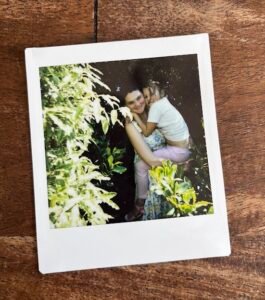

I never thought that I would be a homeschooling mama, but here I am, with four kids under 7, two years into our home education journey. And I love it!
As I considered my husband’s gentle nudges toward homeschooling, I deep-dived into the world of homeschool blogs and podcasts to learn whether these socially-deprived children could still have social skills and whether their harried mothers ever had a moment to themselves. I read over and over that the best part of homeschooling is the gift of extra time with your kids. Even in my first two years, through pregnancy and newborn life with such young children, this has proven to be true, and you may be surprised to know that even with such a busy home life, my school-aged children are thriving academically and socially!
So how do we do it?
During this time, I was also praying for a village of like-minded homeschool mamas and having lots of conversations in the hope of finding one. I ended up joining an in-home art class with my now-friend, Milda. She is a wonderful artist who homeschools her boys and wanted to involve other homeschoolers in the curriculum she is using (we still do art class together every week). She also introduced me to a wonderful bible study group at her church, which has an incredible number of homeschoolers, who have become an important part of our village.
As I said earlier, my first step was to take a deep dive into what it looked like to homeschool in 2023, and I found that all of the descriptions that I liked best mentioned “Charlotte Mason,” so I swiftly ventured down that rabbit hole too…
So we adopted a Classical Charlotte Mason Philosophy and applied it in a somewhat eclectic fashion. For the uninitiated, a Charlotte Mason philosophy emphasizes the education of the whole person, not only the mind, and employs the tools of atmosphere, habits, and rich ideas and experiences to train a child (more on that in a future post). It is also relevant to mention here that a Classical Charlotte Mason philosophy would suggest starting a child’s formal education at 6 or 7 years old.
For all things Classical Charlotte Mason, I have loved The Commonplace podcast by Autumn Kern; it has offered such a vivid picture of the good life (which I am, in many ways, now living) that my eyes still well up with tears at the intro music! I found her in late 2023 and have listened to each of her episodes at least twice (some 4-5 times!).
Despite the recommendation to delay formal education, I was an eager homeschool mama who couldn’t wait to share the joy of reading, so when our first child was five years old, I started with “Teach Your Child to Read in 100 Easy Lessons,” which is a textbook that can be picked up and read through with the child each day. It takes 15-20 minutes per day, and my two school-aged kids (#2 is currently halfway through) have thrived with it. On completion, I provided my daughter with carefully curated books at her reading level for her to explore at her leisure (she has been a motivated reader, so this took very little effort on my part).
At this point, I had a five-year-old who enjoyed reading and was feeling pretty accomplished. Our newborn arrived around this time, and we leaned into learning through play and exploration and reading good books, knowing this would develop a habit of attention, expand vocabularies, and fill their imaginations with rich ideas, which would later show up in their play.
Emerging from the newborn fog and unsure where to go with home education from here, we purchased The Children’s Tradition curriculum (in its beta state) by Amanda Faus. The Children’s Tradition has been a wonderful guide through the philosophy and pedagogy of classical education and provides book lists by age and topic, suggestions of pacing and order to read through the books, and how to apply the curriculum in a family setting with children of different ages. It is written from a Christian perspective and is heavily influenced by the teachings of Charlotte Mason and John Senior. It isn’t really a curriculum in the traditional sense, but it has been a wonderful tool to adapt to our family, and everything about it is beautiful and encouraging. In short, it makes the whimsical poetic mode of classical education attainable for the mum with porridge in her hair.
Because I haven’t *entirely* embraced classical pedagogy, and I like to be able to measure what has been learned, we use The Good and the Beautiful resources for Math, Handwriting and Language Arts. The Good and the Beautiful uses biblical concepts throughout its teaching, and its content is consistent with the ideals of training the whole person and focusing on what is true, good, and beautiful. The lessons are kept short, and my kids love it.
Remember my friend Milda? Well, around this time, the bible study connections provided us with the opportunity of being a founding member of the Christian Co-op that we are still part of today.
This year, we have added The Biggest Story curriculum to our morning routine, and I would recommend this to anyone – homeschooling or not! Of course, the lovely Milda also introduced me to this gem. The Biggest Story curriculum is a set of six books (5 teaching and one filled with activities and colouring pages) that work through 104 stories in the bible, one per lesson, always linking into the overarching gospel message. It is beautiful and engaging and adaptable to lots of settings. They also have all of the activities and colouring pages freely available on their website to print.
During bible study, we homeschool mamas have recently joined forces to take turns teaching a particular topic while the kids are together. At the moment, we are working through a geography curriculum. My older two also do other extracurriculars at different times of the year, such as swimming, sport, dance, and parkour. There is also a mums and bubs group, which we joined through our church a few years ago, where my older kids are learning to serve alongside me by reading stories to the younger kids and helping with snacks, shoes, and creating fun.
When we are home, we make space for lots of time to play (together and alone), learn domestic life-skills, engage in habit training, and spend time outdoors. Some of my favorite things (thank you, Charlotte Mason) are tea time and fairytales, and watercolours on a rainy day.
If this all sounds like a lot – it is! But it really is beautiful, and without the constant dynamic shifts of being apart and together again, the home is more settled, sibling relationships thrive, and my own expectations are better ordered. We are building a village in our own home.
Do you homeschool? Have you considered it? I’d love to hear from you!